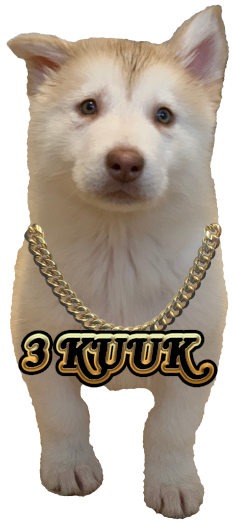


The ideal adult male will be 85 pounds and 25 inches at the shoulders, while females will be 75 pounds and 23 inches at the shoulders. The body, broad heavily boned and muscled, is longer than the height of the withers. Well developed chest, half the height, with strong neck. Heavy head with large and bulky mouth. Dark brown eyes and slightly rounded ears. Large feet with a well furred tail over the back. Thick and coarse guard coat with dense and oily undercoat. Malamutes are affectionate, friendly, loyal, and playful. Bred to be a sled dog for heavy long hauls in the Arctic conditions, malamutes have the physical and mental attributes for efficient performance. Malamutes are pack animals.
Should feed high-quality well balanced veterinarian approved dog food. Food bowls should be separated due to protection/aggression from other dogs or watched under close supervision. I feed Purina ONE Smart Blend wet and dry good, with added boiled chicken for my picky eater. Clean fresh water should always be available.


Coats should be brushed weekly. Will shed coat twice a year, heavy brushing of under coat recommended. Bathed every 6-8 weeks. Brush teeth, clean ears, and trim nails regularly. Coat and skin should be checked regularly. On top of the everyday pet health concerns, some genetic concerns are hip dysplasia, eye problems, hypothyroidism.


They require daily exercise. Any well-fenced yard or enclosed space will suffice. They love to be outdoors and enjoys running, swimming, and hiking. Not enough daily exercise may lead them to be destructive, also caused by anxiety and boredom. Socialization and obedience training should be done at an early age due to aggression. Patience will be needed as malamutes are often stubborn but are intelligent and independent.
Malamutes have the natural instinct to hunt small prey. Do not be surprised if they show up with a dead animal. The above videos were taken at my home, only minutes away from the University of Pittsburgh.
 3 Kuuk Malamutes